Six guests is the sweet spot for a tea tasting. It's enough people to fill a table and start a conversation, and few enough that one person can pour for everyone without losing track of the pot. You don't need a dedicated tea room, antique cups, or a host who can name every cultivar in Yunnan. You need a plan, a kettle, and about two hours.
What follows is the checklist worth following: how to set the table, how to order the teas so the last cup tastes as good as the first, what to put on the tasting cards, and which snacks actually clear the palate instead of smothering it.
Set the table before you set the water
Start with the table, because everything else depends on how much room you have. Six people need six of everything, and clarity matters more than beauty.
- One small cup per person per tea — 60 to 90 ml is ideal. Tiny cups mean small sips and more refills, which is exactly what you want.
- A water glass, filled and kept filled. Plain water, room temperature or slightly warm, is the workhorse cleanser of the whole evening.
- A tasting card and a pencil. Pencils, not pens — guests cross things out and change their minds.
- A small plate or napkin for crackers, and a spoon that can rest somewhere other than the tablecloth.
- A shared spent-leaf bowl in the middle. Leaves pile up fast, and one bowl keeps the table from turning into a compost heap.
Behind you: a kettle you can pour from without reaching over anyone, a thermos of hot water for top-ups, and two or three brewing vessels — a gaiwan, a small teapot, a strainer. If brewing at the table feels like too much performance, brew in the kitchen and carry the tea out in a pitcher. Guests won't hold it against you. What they will notice is whether the second cup is as warm as the first.
Order the teas so the last one tastes like something
Five teas is the right number for six guests; six is the ceiling. Beyond that, cups blur together and nobody remembers anything after the third pour. Order them light to dark, delicate to assertive.
- A white or a light green — silver needle, dragon well. Bright and gentle, it wakes up the mouth.
- A second green or a floral oolong. Tie it to a place: a Taiwanese oolong, a jasmine-scented green.
- A roasted oolong or a lighter black. This is the middle cup, where the room usually starts talking.
- A full-bodied black — Assam, Keemun, a Yunnan gold.
- Something odd, smoky or aged, if the group is curious — a lapsang souchong or a shou puer.
Avoid opening with a smoke bomb. Lapsang souchong first will flatten every tea after it; it's a fine last cup and a poor first one. Same for a heavily flavoured blend.
Keep the portions small. Roughly three grams of leaf per 150 ml of water, steeped shorter than you'd steep for yourself, gives you eight to ten small cups per tea instead of a mug of something gone bitter. Note the water temperature on the card — green teas around 75–80°C, oolongs hotter, blacks and puer near boiling. No thermometer? Let the kettle sit for a minute or two after it clicks off before the lighter teas.
Tasting cards that people actually fill in
Nothing kills a tasting party faster than a score sheet with twelve columns and a points system. Guests start grading instead of tasting, and the pleasure drains out of the room. Keep it to five lines.
- Tea name and where it's from — leave a blank if you want to hide it
- Dry leaf: what does it smell like?
- The liquor: colour first, then flavour
- Three words, not sentences
- Would you buy it? Yes, no, maybe
The three-word rule is the whole trick. It's short enough that nobody feels self-conscious and specific enough to be useful later: buttered toast, wet stone, honey beats "nice" every time. On the back, add brewing notes — leaf weight, water temperature, steep time — so a guest who loves something can repeat it at home.
If your group likes games, pour one tea blind. Number the cups, hand out cards, ask everyone to guess the type. It levels the room. The person who reads about tea constantly and the person who drank nothing but supermarket bags last week are suddenly working from the same information.
Palate cleansers: what to serve, what to skip
Between teas you want something neutral that resets your mouth without leaving a flavour of its own. Water is the core of it. Everything else is support.
- Plain crackers or crusty bread, unsalted. A small bite absorbs tannin.
- Blanched almonds or plain cashews. Neutral fat, no sugar coating.
- Apple slices or plain pear. Crisp, clean, no juice dripping everywhere.
- Plain sparkling water. The bubbles scrub the tongue. Skip the lime.
Leave off the table: strongly flavoured cheese, dark chocolate, anything minty, citrus, cured meat, spiced nuts. If a guest is a habitual mint gum chewer, mention it in advance, because mint will follow the first three teas. Coffee beans are a common trick but a poor one — a sniff of your own sleeve at the elbow, or thirty seconds of fresh air, resets the nose better and doesn't leave the room smelling like a café.
One practical note: tea contains caffeine, and four or five tastings add up. Serve the stronger teas early, keep the pours small, and finish by late afternoon if anyone in the group is sensitive. A guest with a health condition should make that call with their own doctor, not with their host.
A two-hour running order
- Fifteen minutes before. Kettle on, water into the thermos, table set.
- 0:00. Guests arrive to plain warm water and crackers. Let them settle.
- 0:15 to 1:45. Five teas, roughly eighteen minutes each: brew, pour, smell, sip, write. Rinse the cups with hot water between teas — never soap, the residue clings.
- 1:45. Last tea, leftover crackers, everyone compares cards out loud.
Read the room as you go. If conversation is good after three teas, stop at four and let it run. The schedule serves the table, not the other way around.
After everyone leaves
Rinse the cups in hot water, tip the spent leaves into the garden or the bin, and put the kettle somewhere it won't be knocked over. Then keep the cards. Write the date on the back of your own and tuck the stack into a tin, because the notes are the only part of the evening that improves with age.
Next time, open with whichever tea earned the most "maybe" answers and build a new sequence around it. Six guests, five teas, two hours, one bowl of spent leaf. That's the whole party.
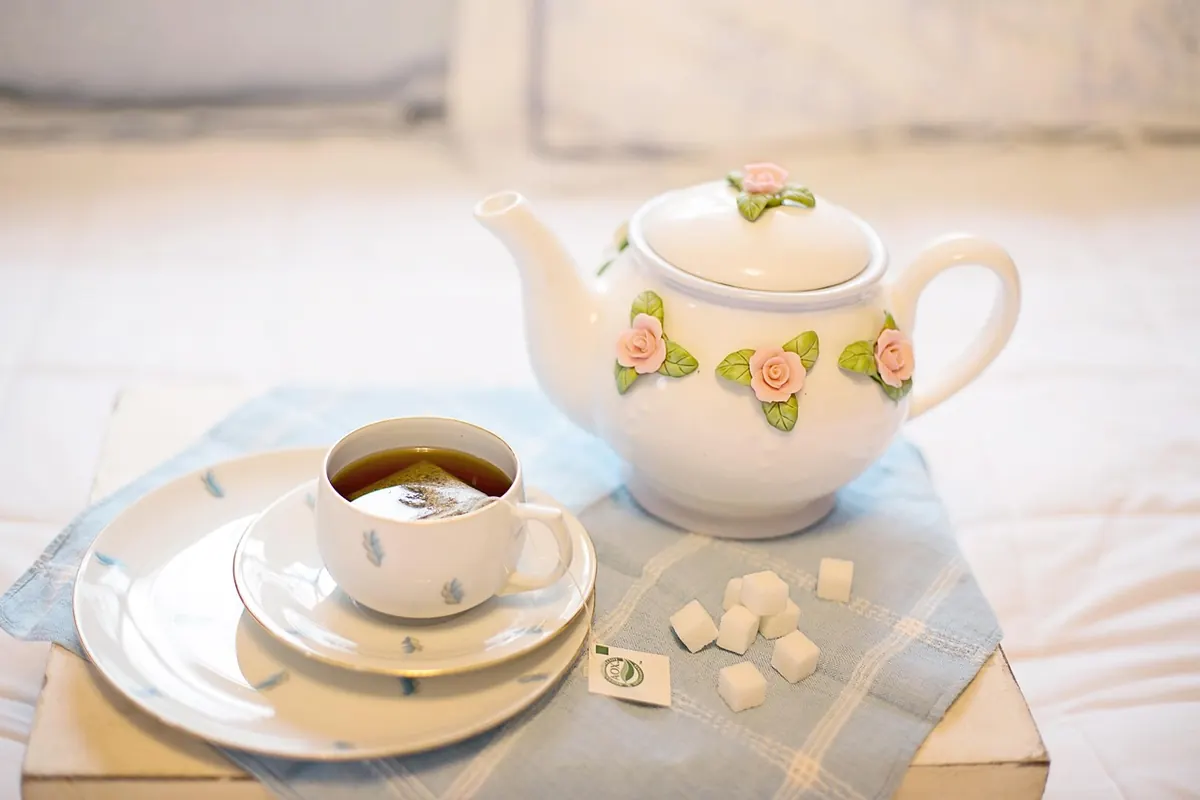
Photo: JillWellington / Pixabay